
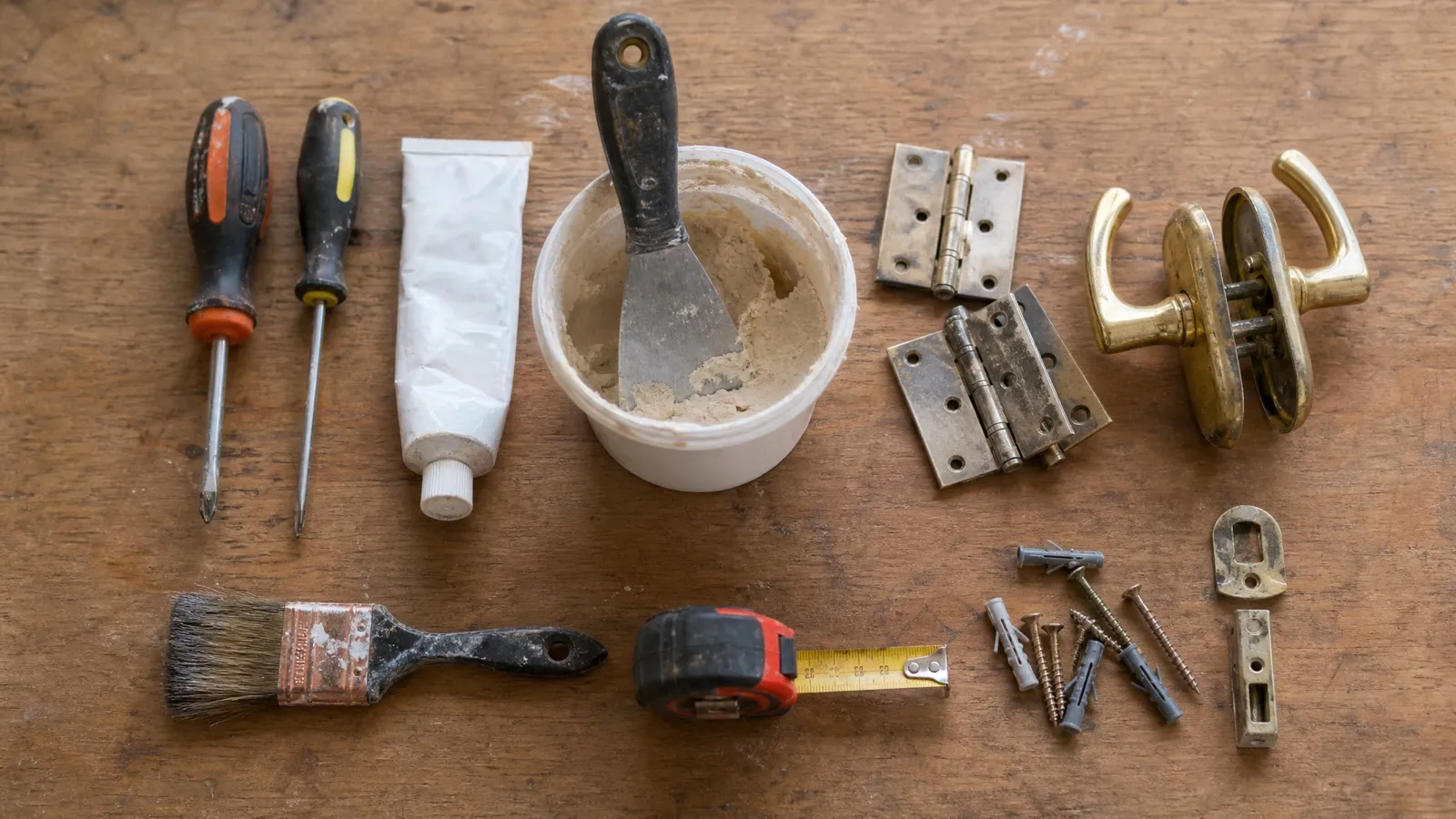
There is a particular kind of job that sits on the mental to-do list for months, sometimes years. You notice it every time you use that door, walk past that wall, or grab that wobbly towel rail. It isn't broken enough to seem urgent. It's just quietly getting worse.
In Canberra's climate, the temperature swings, the dry summers, the hard frosts, that's exactly how small problems become expensive ones. Wood moves. Plaster cracks. Fixings work loose. What was a 20-minute repair in February is a half-day job by July.
This is a guide to ten of the most common small jobs we come across in Canberra homes, why they matter, and roughly how long each one takes to sort. If any of them are sitting on your list, the time to deal with them is now, not later.
1. Loose door handles
A door handle that wobbles or turns without properly latching feels like a minor annoyance. Give it six months and it becomes a security issue. The spindle wears, the mechanism inside the latch assembly gets sloppy, and eventually the handle either stops retracting the latch or comes off entirely.
The fix itself is straightforward: tighten the grub screws, replace the spindle if it's worn, or swap the handle set if it's past the point of adjustment. It takes 20 to 40 minutes depending on the handle type. Left too long, a worn spindle can damage the door itself, and once you're replacing the latch housing or filling screw holes to re-drill, the job is a different category altogether.
If the handle is loose on an external door, bump it up the list. It isn't just inconvenient, it's a liability.
Typical time to fix: 20 to 40 minutes
2. Sticking doors
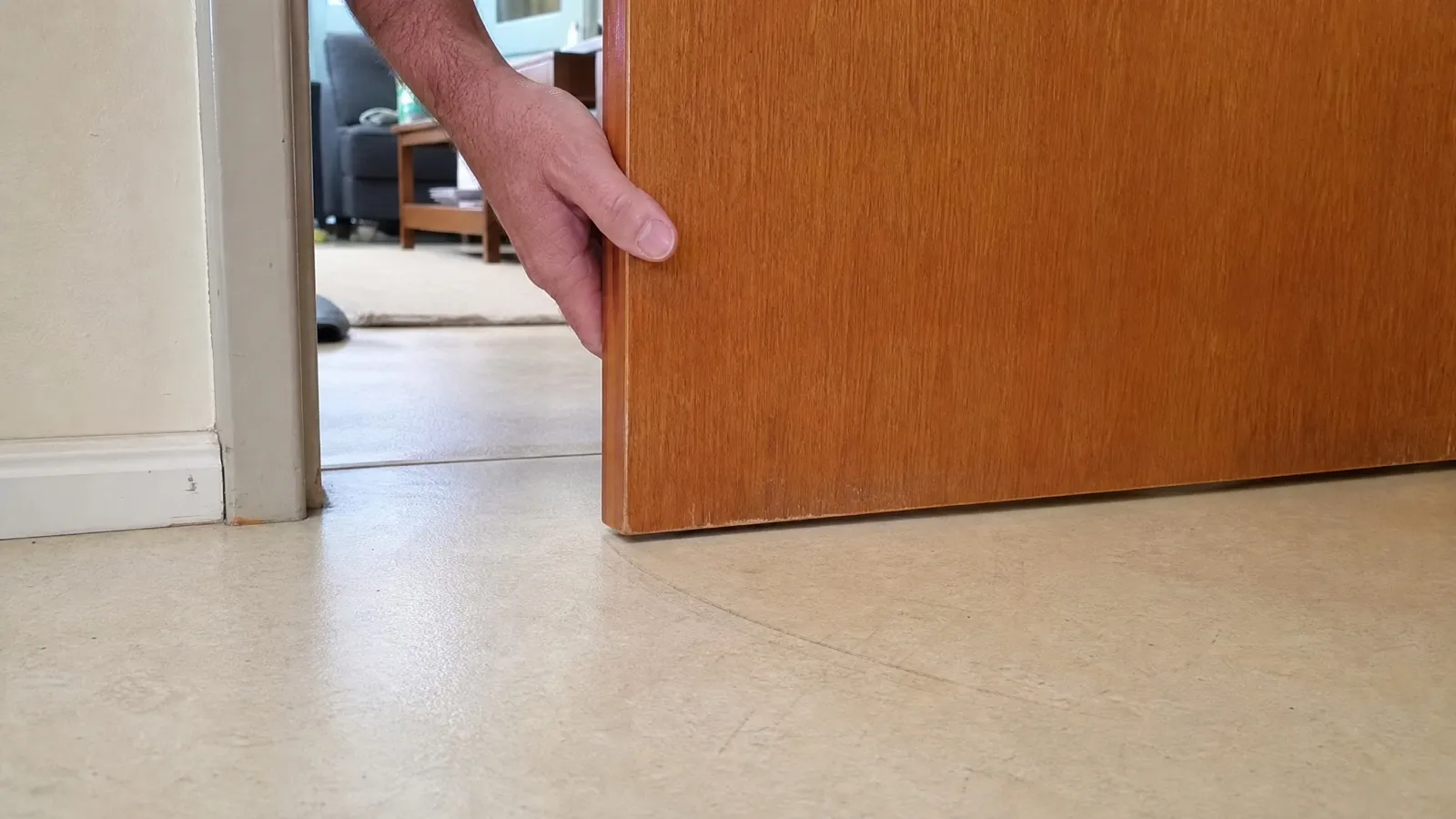
Sticking doors are the most Canberra-specific problem on this list. The ACT's temperature range is extreme by Australian standards, 40-degree summers and sub-zero winter mornings within the same property year after year. Timber doors absorb and release moisture with every season change. They expand. They contract. The frame moves with the slab. Over time, the door starts catching on the frame, dragging on the floor, or refusing to close without a shoulder-charge.
Most homeowners ignore this and just learn to live with it. That's a mistake. A door that's fighting its frame is stressing the hinges, the latch plate, and the frame itself with every use. The hinge screws back out. The latch plate shifts. The frame can split. A door that needed 10 minutes of planing in autumn can need a new door and frame by the time the damage compounds.
The fix depends on where it's catching. Minor sticking usually needs a light plane or sand on the binding edge and a fresh coat of sealer to slow re-absorption. More significant movement might mean re-hanging the door or adjusting the hinges. A good handyman will identify which it is without overcomplicating it.
Typical time to fix: 30 minutes to 2 hours, depending on severity
"Nine times out of ten the call comes in winter, when the door that stuck a little in March won't shut at all. The March version is ten minutes with a plane. The July version is a re-hang." , TEAM NOTE · WODEN VALLEY CALL-OUT
3. Damaged plaster
Plaster cracks in Canberra homes are nearly universal. The combination of low humidity in summer and cold dry winters means walls expand and contract constantly. Hairline cracks around door frames, in corners, and along ceiling joins are the result of normal movement, but normal doesn't mean harmless if they're left alone.
Small surface cracks are a patch-and-paint job, a 30-minute repair. Leave them exposed and moisture from winter condensation gets in, the filler crumbles, and the crack widens. Leave a wider crack long enough and you're looking at whether the movement behind it is structural rather than cosmetic. Most cracks in Canberra homes are cosmetic, but you want them assessed by someone who can tell the difference, not just filled by someone who can't.
More significant damage, fist-sized holes, water-damaged sections, or cracks that keep reopening after filling, suggests something else is going on behind the wall that needs dealing with first. A handyman can handle standard plaster patching. We'll also be honest with you if what we find points to a bigger issue.
Typical time to fix: 30 minutes to 2 hours for standard patching (drying time between coats means a full job may need two visits)
4. Loose towel rails and bathroom fittings
A towel rail that's pulling away from the wall is one of the most common small bathroom jobs. The fixings were usually installed into plasterboard with hollow-wall anchors, and those anchors have a habit of gradually working free under repeated loading. Once the fitting starts to move, every use pulls the anchor a little further, widening the hole until the anchor is useless and the wall needs patching before anything can be refixed properly.
The same applies to toilet roll holders, hooks, and cabinet fixings. If it wobbles, fix it now. The repair is cheap. The result of leaving it until the fitting pulls clean through the wall, patch, prime, repaint, refix, costs significantly more in materials and time.
In tiled bathrooms, a fitting that's pulling away from the wall can also crack grout or split tile edges. Once that happens, the job expands again.
Typical time to fix: 20 to 45 minutes
5. Broken or worn hinges
Hinges wear. The barrel wears out, the screws strip from the housing, or the timber around the hinge screws degrades until the screws no longer hold. When that happens, the door starts to sag. A sagging door puts uneven stress on the opposite edge of the frame, causes the latch plate to misalign, and eventually results in a door that won't close or latch at all.
Hinge replacement on a standard interior door takes 30 to 45 minutes. Fixing stripped screw holes before a new hinge goes in adds time, usually involving toothpicks or timber plugs in the holes to give the screws something to bite into. If the door has been left sagging long enough that the frame itself has been damaged, the job expands considerably.
Check your doors. If any of them sag noticeably when open, or if you can see daylight around the frame unevenly, the hinges are the likely cause and the likely fix.
Typical time to fix: 30 to 45 minutes per hinge set
THE 20-MINUTE RULE
Almost everything on this list shares one number: the early fix is usually under an hour, and the delayed fix is a multiple of it. If a job would take us twenty minutes today, that's the cheapest it will ever be. It only gets more expensive from here.
6. Wobbly shelves and fixings
A shelf that rocks, or brackets that have pulled away from the wall, is a simple repair until it isn't. The point of failure isn't the shelf, it's the fixing in the wall. Most domestic shelving is fixed into plasterboard with anchors that weren't rated for the load they've been given, or were installed without hitting a stud.
Re-fixing a shelf properly, into studs, or with the right anchor type for the wall material and the load, takes 20 to 40 minutes. Leaving it until the bracket fails and the shelf drops takes considerably longer to clean up, particularly if it drops onto something below it or pulls a section of plasterboard off the wall in the process.
Shelving in laundries, above benches, and in garages is often carrying more load than the original installation was designed for. If it wobbles, it's worth getting right.
Typical time to fix: 20 to 40 minutes
7. Small tile damage
A cracked or chipped tile looks minor. It sometimes is. But cracked tiles in wet areas, showers, around baths, kitchen splashbacks, let water behind the tile surface. Once water is behind the tiles, the adhesive starts to fail, the waterproofing membrane can be compromised, and tiles start to hollow out and lift. A single cracked tile in a shower, left for a year, can mean multiple tiles needing replacement and the waterproofing underneath needing repair.
Cracked grout is a related problem. Grout is the first line of defence in tiled wet areas. When it cracks or crumbles, water gets through. Re-grouting a section of deteriorating grout takes under an hour. Repairing the water damage that results from not re-grouting takes considerably longer.
Neither cracked tiles nor failed grout are jobs that fix themselves. A handyman can handle minor tile replacement and regrouting for standard residential work. Complex shower waterproofing issues may need a tiler.
Typical time to fix: 1 to 3 hours depending on scope (tile replacement needs a match for the existing tile, so source a spare where you can)
8. Fence and gate problems
Fences in Canberra take a beating. Hot summers dry out timber and cause it to split and warp. Winter frosts can heave post footings. Wind events, and Canberra gets more than its share, pull palings free and stress gate hinges. A fence that's starting to lean, or a gate that's dragging on the ground, is asking to be dealt with before the next weather event makes it worse.
A loose paling or two is a 20-minute job. A gate that's dropped off its hinges because the hinge screws stripped out is a 45-minute job. A fence section left until the rails have rotted through and three posts need replacing is a half-day job. The difference in cost and disruption is significant.
Gates get more use than any other part of a fence and wear faster. Check the hinges, the latch, and the sag. If the gate needs a shoulder to close, fix it before the hinge tears out of the post.
Typical time to fix: 30 minutes to 2 hours depending on scope
9. Minor water damage stains
A water stain on a ceiling or wall, that yellowish-brown ring that appears after a leak, is worth investigating before it's painted over. The stain itself is cosmetic. What caused it might not be.
Canberra homes get hail. They get heavy autumn rain. Roof flashing moves over time. Plumbing fittings in the floor above develop slow drips. Any of these can cause a stain that looks like it has dried out and resolved itself. Sometimes it has. Sometimes the source is still there, wetting the structure slowly with every rain event.
Before painting over a water stain, confirm the source has been fixed. Check the roof space if it's accessible. Check the room above. If it's a ceiling stain below a bathroom, check the silicone seal around the bath and shower. If the source is active, sealing the stain with primer and repainting will just see it bleed through again six weeks later.
Minor stains from a resolved source, patch, prime with a stain-blocking primer, repaint, take 1 to 2 hours. Finding and fixing an active source adds time depending on what it is.
Typical time to fix: 1 to 2 hours for cosmetic repair once the source is confirmed resolved
10. Gutter blockages
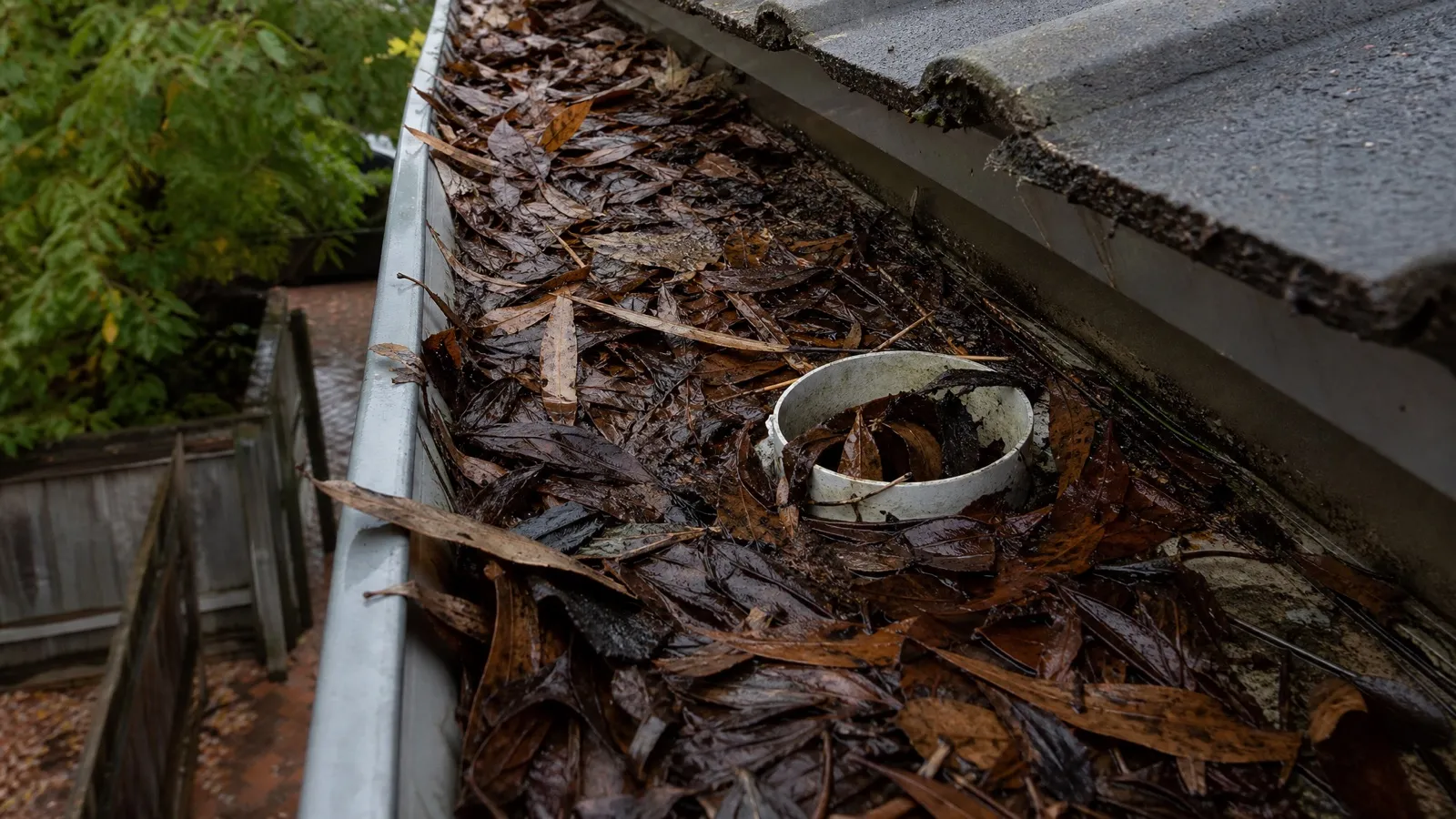
Canberra's autumn is beautiful. It's also the reason gutters in suburbs like Yarralumla, Deakin, Hughes, O'Connor, and Lyons can go from clear to completely blocked in eight weeks. Deciduous trees drop enormous volumes of leaf matter. It collects in the gutter, compacts with rain, and forms a dam.
The consequences are predictable: water backs up under the roof sheeting, overflows at the fascia and runs down the wall, or sits pooled in the gutter and speeds up rusting and deterioration. In bushfire-prone parts of the ACT, leaf and bark litter in the gutter is a fire risk that isn't theoretical.
A standard gutter clean on a single-storey home takes 1 to 2 hours. Most Canberra homes benefit from one clean after the leaves fall, late May or June, before the winter rains. Properties with heavy deciduous coverage often benefit from two. It is one of the simplest and most cost-effective maintenance tasks on this list.
Typical time to clean: 1 to 2 hours for a standard single-storey home
The pattern behind all of it
Every job on this list has the same characteristic: it is easy to ignore because it isn't broken enough to demand attention right now. The door still closes. The shelf is still holding. The stain looks dry. The gutter probably still gets water through.
That's exactly what makes them worth dealing with. The cost of fixing something while it's small is almost always a fraction of the cost of fixing it after neglect has turned it into something bigger. A 20-minute hinge repair now versus a new door in six months. A 30-minute plaster patch versus water damage to the wall behind it. A 90-minute gutter clean versus a fascia repair.
None of these are dramatic. They're just the practical reality of maintaining a home in a climate that is harder on buildings than most of Australia.
Got a few of these on the list? We handle all of them across Canberra and Queanbeyan: one call, one visit, one invoice. We tell you what needs doing and what it costs before we start. Ring 0424 705 056 or book a small job.