
A routine inspection notice arrives and the clock starts. In the ACT a landlord must give the tenant at least 1 week of written notice, so the property manager, the landlord and the tenant all have the same 7 days to deal with whatever is on the list. Polytechnitis repairs Canberra and Queanbeyan rentals for landlords, property managers and tenants, and the same handful of items turn up again and again.
This guide covers what the ACT rules actually require, what an inspector typically checks, the repairs worth fixing first and the ones that need a licensed trade instead. It is written for the week between the notice and the inspection.
What the ACT rules say about inspections and repairs
Polytechnitis works from the ACT Government's renting guide, last updated on 30 January 2026, which says a landlord must give a tenant at least 1 week of written notice before any standard inspection. 4 points in it matter for repairs.
- 1 week of written notice before a standard inspection.
- 3 windows for standard inspections: the first month of a tenancy, the final month, and twice in each 12 month period from when the tenancy begins.
- 1 week of written notice also applies before a repair inspection.
- Repair timeframes: urgent repairs as soon as practicable, non-urgent repairs within 4 weeks.
The notice period governs the inspection and the 4 week limit governs repairs, so they are 2 separate sets of rules. A repair the tenant has already reported has its own timeframe whether or not an inspection is booked. The ACT guide also says tenants must tell the landlord of any damage or required repairs.
What property managers look at in a routine inspection
Polytechnitis does not set the inspection checklist, because each agency uses its own. RentBetter's published guide to routine inspections gives a representative list of what gets checked, and it splits into 2 halves.
Inside the property:
- Whether the property is tidy and well presented
- Whether the smoke alarms, lights and light switches work
- The condition of kitchen appliances and fittings, and leaking sinks or taps
- Flooring damage such as stains, cracks and scratches
- Sliding doors and windows
- Wall marks or holes
Outside the property:
- External door locks and handles
- Garage lock and organisation
- Garden and lawn upkeep, and overhanging branches
- Gate and fence damage
- Cobwebs under the eaves
The same guide gives the purpose of a routine inspection as ensuring there is no damage or other issues in the rental property. That is the test an item has to pass: does it look like damage or a maintenance problem on the day.
The repairs worth fixing first
Polytechnitis would sort these in the order an inspector walks through a property, because a clean front door and a patched hallway wall set the tone before anyone reaches the bathroom. Each of these is handyman work, not licensed work.
Doors, locks and handles
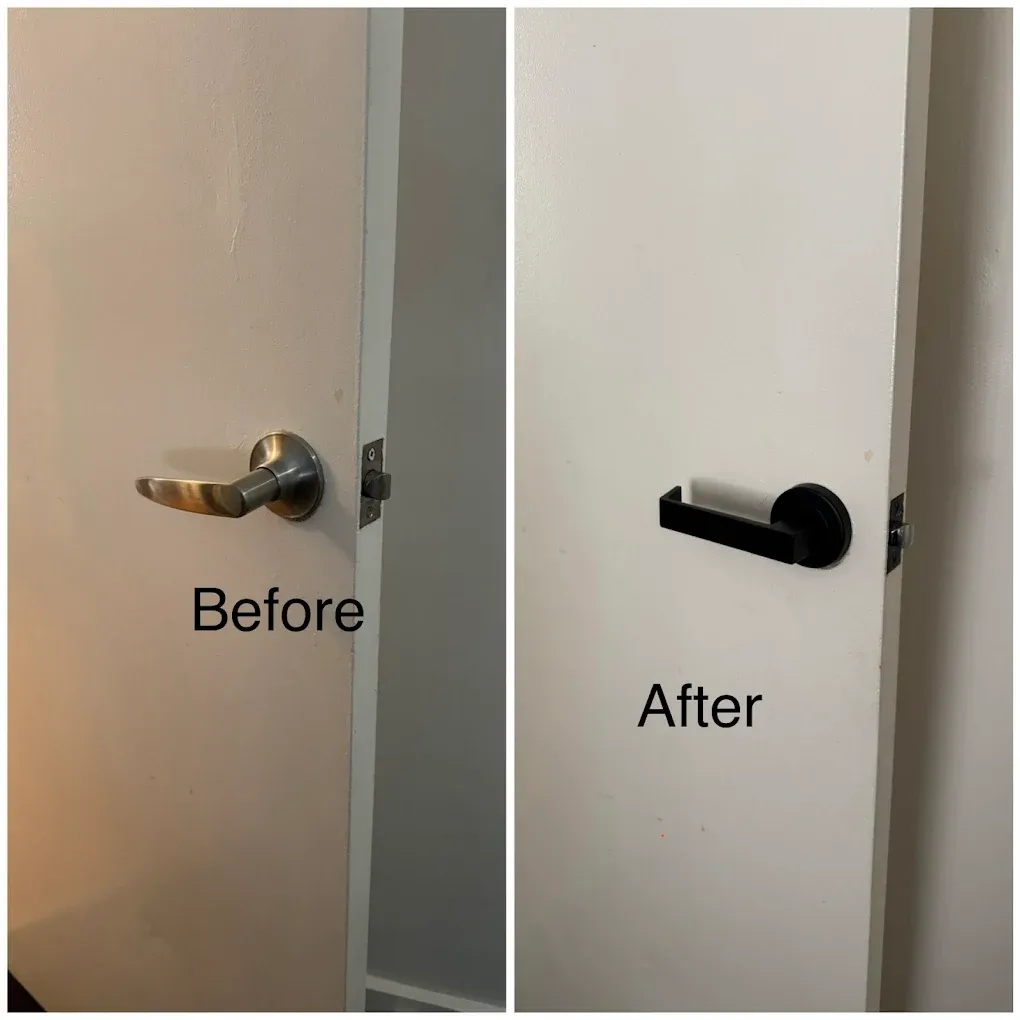
External door locks and handles are on the inspector's list, and a handle that wobbles or a lock that sticks reads as a maintenance fault. Sliding doors that drag on the track are on the same list. Our door and sliding door repair page covers what can be adjusted and what needs replacing.
Wall marks, holes and cracks
Wall marks and holes are named on the checklist, and picture hook holes, door handle dents and cracked cornices are the usual culprits. They are repaired flush and primed so they do not show. Polytechnitis has a full page on plaster and plasterboard repairs, and one Google reviewer described a plaster repair this way:
"He repaired some plaster damage and helped hang shelves. The finish looks great." MD LIAQUT HOSSAIN LOVELU · 21 SEP 2025 · GOOGLE REVIEW
Mouldy or lifting silicone in wet areas
Black silicone around a shower or a bath edge that has lifted is easy to see and it photographs badly. Replacing it is a surface repair, and our page on shower regrouting and resealing sets out what is a reseal and what is a bigger problem under the tiles.
Gates, fences and the outside
A dragging gate, a loose paling or a failed latch is on the outside half of the checklist. These are routine fixes that belong to ongoing property maintenance, and they are better done before the inspection than listed after it.
What needs a licensed trade instead
Polytechnitis is straight about where handyman work stops, because a handyman who takes on licensed work creates the delay you were trying to avoid. The ACT Government's planning directorate lists the occupations that need a licence in the ACT, and 2 of them show up on rental inspection lists: electricians and plumbers.
- Leaking sinks and taps sit with a licensed plumber.
- Lights and switches that do not work are electrical, and the ACT requires a licence for electrical wiring work. Smoke alarms are a safety item, so ask your agent what they require and use a licensed electrician for anything hard-wired.
- A leak from the roof belongs to a roofer, and the ceiling stain it leaves can be patched once the source is fixed.
Older homes carry one more caution. WorkSafe ACT applies its asbestos advice notice to all homes built in or before 1990, so cutting or sanding wall and ceiling sheet in an older rental is not a job to start without knowing what the sheet is. Where a repair list has items on both sides of the line, we quote the handyman half and name the rest, which is why the full ACT list of urgent repairs and who fixes each one is set out on our rental repairs page.
If you are the tenant
Polytechnitis suggests a tenant starts with the ACT guide, which says tenants must tell the landlord of any damage or required repairs. In practice that means reporting it in writing with a photo and the date. Ask the property manager before booking any tradesperson, so you are not paying for something the landlord would have arranged.
Booking the repairs as one visit
Polytechnitis quotes from a list and photos, with a fixed price before any work starts and no call-out fee, and attends once for the whole list. 6 small repairs priced separately become 6 minimum charges, which is why the list is priced as 1 job. Send the notice date, the items from the checklist above and photos, and we will say which are ours and which need another trade.
Sources
Polytechnitis read each of these pages directly on 8 October 2026.
- ACT Government, renting during a tenancy, last updated 30 January 2026: inspection notice, frequency and repair timeframes.
- RentBetter, a guide to routine property inspections: the representative inspection checklist. The page shows no publication date.
- ACT planning directorate, construction licences: the occupations that need a licence, including electricians and plumbers.
- WorkSafe ACT, asbestos advice notice: applies to all homes built in or before 1990, in use from 1 July 2023.
Got an inspection notice and a list? Ring 0424 705 056 or send the list for a fixed quote.